


Video Player - AnyPlay
4.4516.00 Reviews
App Specs
- Version
- 1.6.4
- Updated On
- License
- Free
- Downloads
- 10,000,000+
- Developer
- Efficient Tools
- Categories
- Video Players & Editors
- Platform
- Android, iOS
Screenshots

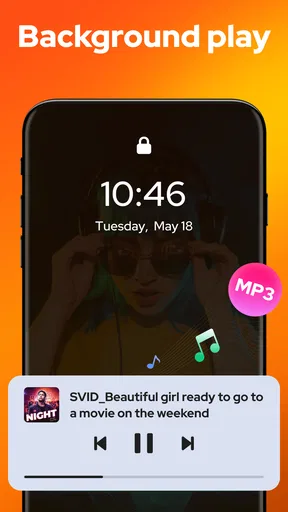
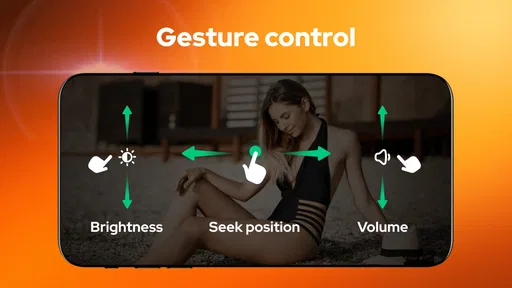
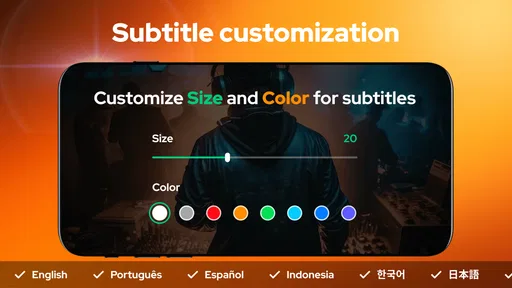
 Analysis by AppCompare
I tend to judge a video player less by its feature list than by how much file-juggling it saves me. Video Player - AnyPlay is aimed at people who keep films, clips, and other media on their phone and want one place to browse and play them. It also includes file-management tools, so its appeal is broader than simply opening a video. I find that combination useful when my media is scattered across folders, though it does mean the app is trying to serve two related purposes at once.
Where AnyPlay fits today
AnyPlay sits in the video player and editor category, although its main draw is playback rather than editing. Efficient Tools develops it, and its current version is 1.5.9. The app is free to install, with in-app purchases ranging from $2.99 to $13.99 per item. It is rated for Everyone and runs on Android 6.0 or later. Its 4.5 average from around 43,000 ratings and more than 10 million installs suggest that plenty of Android users have found a reason to try it, but those figures don’t tell me whether its particular controls suit my habits.
The practical question is whether I want a dedicated player or a more general media utility. If I watch files in several formats, rely on subtitles, or like adjusting playback without switching apps, AnyPlay has a compelling case. If I mostly tap videos in a messaging app or use a streaming subscription, a separate player may add little to my routine. Its usefulness depends less on how many features are present than on whether I actually reach for them.
First Impressions
As soon as you open AnyPlay, you're greeted with a clean and intuitive interface. It's like that friend who's always well-organized and ready to help you out. The design is sleek, with easy navigation that doesn't overwhelm you with too many options. It's all about simplicity here, and honestly, who doesn't love that?
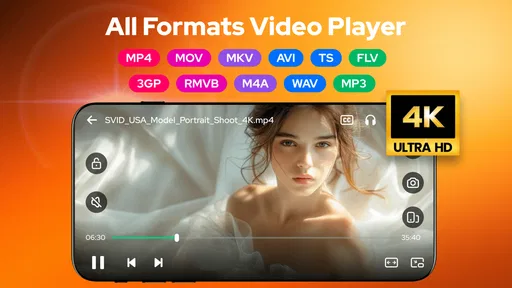
The app supports a myriad of video formats, which is a huge plus. Whether you’ve got an MP4, AVI, or even some obscure format, AnyPlay handles it like a champ. No more annoying "format not supported" messages ruining your binge-watching session.
Features Galore
Now, let’s talk about the features because this is where AnyPlay really shines. First up, we’ve got the subtitle support. It’s robust, allowing you to download subtitles directly from the app. No more hunting the internet for that perfect sync.
Another highlight is the network stream feature. If you’re into streaming from your local server or a URL, AnyPlay has you covered. It’s surprisingly seamless, ensuring your videos buffer less and play more. Excellent for those movie nights when you want zero interruptions.
Worth Reading Before You Choose

EA SPORTS FC Mobile 26 Is a Bigger Football Game, but It Takes Time

Flipboard Shows What News Apps Must Do Beyond the Feed

Switching to Android Auto Means Rethinking Your Driving Routine

Google Calendar Makes a Crowded Week Easier to Manage

Ludo King Makes the Most of the Minutes Between Plans

Baby Panda World Brings Quick Play to Modern Phones, but Its Game Library Feels Busy
Oh, and did I mention the audio-video synchronization feature? It's like magic. If you’ve ever suffered through videos where the sound is just a tad off, this little gem of a feature will be your new best friend.
Making its tools work together
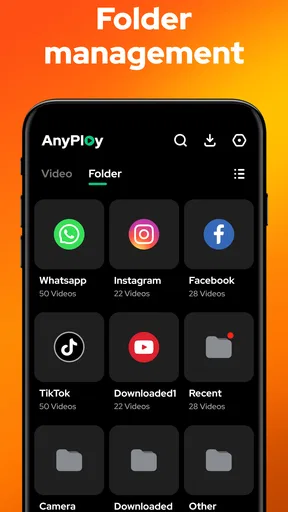
The strongest workflow here is to treat the app as a small media hub, not just a screen for pressing play. For example, if I have a downloaded film and its subtitle file in separate folders, I can use the file manager to locate the video, start playback, and then address the subtitle from within the viewing workflow. That saves a few trips between apps. I’d still keep media files organized with clear names: a subtitle that is hard to identify remains hard to identify even when the player can help find one.
Subtitle downloading is particularly handy when watching a foreign-language film or checking dialogue in a noisy room. I would first verify that the subtitle matches the cut of the video, then use the synchronization adjustment if the timing drifts. Those are related but different problems: shifting timing can correct a delay, while a subtitle from a different edit may keep slipping out of alignment. Being able to adjust sync is useful, but it cannot make every mismatched subtitle fit perfectly.
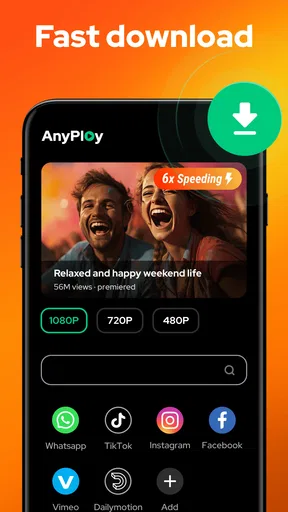
The network-stream option is best thought of as a convenient route to media you already have access to, rather than a replacement for every streaming service. At home, it may spare me from copying a large file onto the phone before watching it. On a weak connection, though, local playback from storage is the safer choice; a network stream depends on the connection and source staying available. For a planned trip, I’d test the stream beforehand or keep an offline copy if I’m entitled to store one.
Everyday viewing and control
Using AnyPlay feels like a breeze. The controls are responsive, and the customization options allow you to tweak your viewing experience just how you like it. Dark mode, swipe gestures, and adjustable playback speed are all here, catering to every type of user out there.
Those controls make a difference in small, repeatable situations. If I’m watching a lecture or a long interview, faster playback can help me get through familiar stretches, while a brief return to normal speed makes dense explanations easier to follow. Swipe gestures can be convenient when I’m holding the phone one-handed, but they also create a learning curve: I need to know which movement changes which setting before using them without looking. I’d try the gestures on a short clip first, rather than discover an accidental change halfway through a film.
And let’s not forget about the playlist feature. You can create playlists of your favorite videos, which is perfect for creating that epic binge-watching session. It’s like having your own personal video DJ.
Playlists are more useful when they reflect a purpose instead of becoming a second, untidy copy of the library. I’d make one for a set of lessons, saved travel clips, or a handful of videos I plan to watch during a commute, then remove items when that task is done. That approach keeps a playlist actionable. If I only have a few videos and rarely watch them in sequence, browsing the files directly may be quicker and simpler.
What changed, and what that means for regular users
The app was released on September 15, 2023, and version 1.5.9 is the version available now. Those facts establish its release history and present version, but they don’t by themselves show what changed between releases. I wouldn’t assume a specific new feature, redesign, or performance improvement without a version-by-version record. For an existing user, the sensible approach is to check the installed version and compare the controls and behavior they actually use after updating.
That distinction matters because a version number is not a promise that a familiar workflow has changed—or that it has stayed exactly the same. If playlists, subtitle timing, or a saved streaming address are central to my routine, I’d check those functions after an update before relying on them for a trip or group viewing. For someone new, the current version is the practical starting point; for a long-time user, personal experience with the app is more informative than guessing at changes from the number alone.
Performance and realistic trade-offs
Performance-wise, AnyPlay doesn’t disappoint. Videos load quickly, and I didn’t encounter any lag or stuttering, even with higher resolution files. It’s optimized to make the most of your device’s capabilities, ensuring smooth playback every time.
That said, “4K” and “HD” describe media the player is designed to handle, not a guarantee that every phone will display every file smoothly. Playback depends on the device and the particular video. If a high-resolution file stutters, I’d first try a shorter sample, close other demanding apps, and check whether a lower-resolution copy is available. That helps separate a file or device limitation from a player preference. I would not choose a player solely on the promise of a resolution label if my main files are unusually demanding.
The app also plays nicely with battery life. It doesn’t drain your device like some other resource-hungry apps do, which is a huge relief if you’re always on the go and need your device to last.
For long viewing away from a charger, I’d still treat battery life as something to manage rather than assume. Screen brightness, screen-on time, network use, and the phone itself all affect how long a session lasts. A locally stored file can also be a more predictable choice than streaming when I’m away from reliable service. These are ordinary mobile trade-offs, but they matter more during a flight, commute, or day out than they do while watching at home.
How it compares with familiar alternatives
Compared with a phone’s built-in gallery player, AnyPlay makes more sense when I want a dedicated place for varied video files, subtitle handling, playlists, and playback adjustments. A basic gallery is often convenient for quickly replaying a clip I just recorded; AnyPlay is more appealing when I’m settling down to watch something longer or sorting media I’ve collected. I wouldn’t replace the gallery for casual clips unless I found myself needing those extra controls often.
Compared with a specialist player focused on advanced technical settings, AnyPlay’s approachable interface is an advantage for everyday viewing, but users who need precise control over codecs, elaborate library management, or highly detailed playback configuration should compare alternatives before switching. I’d also keep a separate file-management app if my work depends on complex sorting or moving documents, rather than expecting a video-focused tool to replace a full file organizer. The useful middle ground is clear: AnyPlay suits someone who wants common playback and media-browsing tasks together, not necessarily a specialist’s complete toolkit.
Who will get the most from it
I’d recommend AnyPlay to Android users who regularly play downloaded videos, need subtitles, or want to stream media from a source on their network without first moving every file onto the phone. It can also suit students and language learners who use playback speed and subtitle timing as part of their viewing routine. For a household that keeps a collection of videos on a local server, the streaming option may be the most valuable reason to install it.
I’d suggest skipping it if nearly all your viewing happens inside subscription services, if you only watch occasional camera clips, or if you need professional editing rather than playback. It is a video player, not a replacement for a dedicated editor. People who rely on a particular specialist format should test a representative file early, and anyone who dislikes managing files manually may prefer the convenience of a service that organizes and streams its own catalogue.
For a realistic everyday example, imagine downloading a film before a train journey, saving its subtitle alongside it, and making a small playlist of other videos for the return trip. I’d check that the film opens and that the subtitles are readable before leaving home; that quick test avoids discovering a mismatch when the connection is gone. If the journey is short and I only want to watch one clip, the phone’s existing player may be enough. AnyPlay earns its place when the combination of files, subtitles, and playback controls saves repeated little hassles.
Remaining gaps and what I’d watch
The main limitation I see is not a missing headline feature but the need to judge how the app fits a particular library. A broad format claim cannot tell me whether every file I personally receive will behave as expected, and a network-stream option does not remove the need for a stable source. Subtitle matching also still requires a little attention. I’d test the formats and sources I use most before making AnyPlay my only route to watching videos.
The free entry point makes that trial relatively easy, while the in-app purchases mean I’d check what an optional purchase adds before paying. The listed purchase range runs from $2.99 to $13.99 per item; I’d decide based on a feature I have actually used, not on the assumption that paying is necessary for basic playback. I also appreciate that the age rating is Everyone, which makes the app broadly suitable as a player, though that rating is not a judgment about the content of videos someone chooses to open.
Going forward, I’d watch how future versions handle the practical details that matter to regular users: whether familiar controls remain easy to reach, whether subtitle and stream workflows stay dependable, and whether updates make the app clearer without making it feel busier. I wouldn’t treat an update number alone as proof of improvement. For now, the current version gives a useful set of everyday tools in one app, and the best test is to try it with the exact kind of video and subtitle I expect to use.
Final Thoughts
So, is Video Player - AnyPlay worth your time? In my opinion, absolutely. Whether you’re a casual viewer or a hardcore video enthusiast, this app has something for everyone. With its user-friendly interface, extensive feature set, and stellar performance, it’s a solid choice for anyone looking to enhance their video watching experience.
If you’re tired of your current video player’s limitations, give AnyPlay a whirl. It might just become your new favorite app for all things video. And remember, the best way to know if it’s the right fit for you is to try it out yourself. Happy watching!
Pros
- Supports a wide range of video formats.
- Smooth playback with no buffering issues.
- User-friendly interface and navigation.
- Customizable playback settings.
- Offline mode for watching downloaded videos.
Cons
- Ads can be intrusive at times.
- Limited features in the free version.
- Occasional crashes on older devices.
- Requires permissions that some may find invasive.
- Lacks advanced video editing tools.
FAQs for Video Player - AnyPlay
What video formats does AnyPlay support?
AnyPlay is renowned for its wide range of supported video formats. Users can enjoy videos in MP4, AVI, MKV, MOV, and many other popular formats. This versatility ensures that you won’t need additional converters or software to watch your favorite videos, making AnyPlay a convenient choice for varied media libraries.
Is AnyPlay compatible with both Android and iOS devices?
Yes, AnyPlay is designed to work seamlessly on both Android and iOS platforms. The app is optimized for performance across different devices, ensuring smooth playback and user-friendly navigation. Whether you’re using a smartphone or tablet, AnyPlay promises a consistent and enjoyable viewing experience.
Does AnyPlay offer subtitle support?
Absolutely, AnyPlay comes with robust subtitle support, accommodating multiple subtitle file formats like SRT, ASS, and SSA. Users can easily load subtitles and adjust settings such as font size and color for better readability, enhancing the overall viewing experience for foreign language films or hearing-impaired users.
Are there any in-app purchases or ads in AnyPlay?
While AnyPlay offers a free version with basic features, it includes ads. To unlock advanced features and remove ads, users can opt for in-app purchases. This paid version enhances user experience by providing a cleaner interface and additional functionalities, making it worth considering for frequent users.
How user-friendly is the interface of AnyPlay?
AnyPlay boasts an intuitive and easy-to-navigate interface. Designed with user convenience in mind, it features a clean layout with accessible controls for playback, volume, and settings. New users can quickly familiarize themselves with the app, making video watching a hassle-free experience right from the start.


